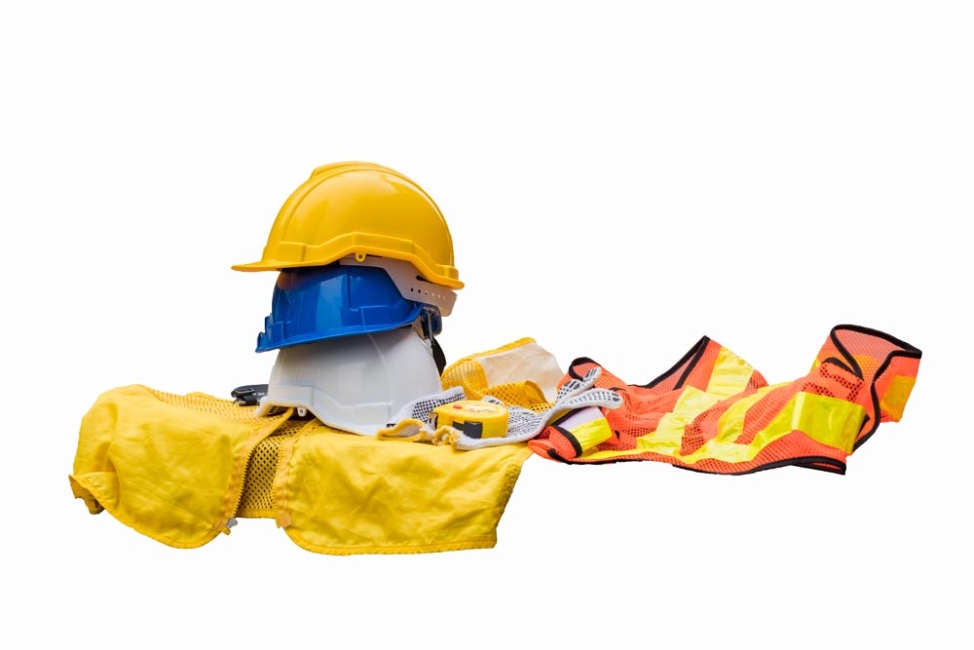
In every public works department, stormwater crew, or highway operation, personal protective equipment (PPE) is the frontline defense against injury. But one factor determines whether that equipment performs as intended: fit. Even the best-rated hard hat, the thickest pair of gloves, or the most expensive safety glasses can fail to protect if they aren’t sized or adjusted properly. For crews working around heavy equipment, in confined spaces, or along busy roadways, fit is not a minor detail, it is a critical safety element.
Below is a practical look at why proper fit matters and how crews can ensure their PPE actually does its job.
Hard Hats: More Than Just a Helmet
Hard hats are tested to strict standards, but their protective value vanishes if they’re not worn correctly. A loose, backward, or improperly seated hard hat can easily shift during a fall, slip off when bending over, or leave part of the head exposed.
Why Fit Matters
- Stability: A properly adjusted suspension system keeps the hard hat centered and stable during movement.
- Energy Absorption: The internal suspension must create space between the helmet shell and the head. If it sits too low or too high, the hat cannot disperse impact as designed.
- Retention: Chin straps or accessory straps should be used in windy conditions, on uneven terrain, or when leaning into structures like catch basins or culverts.
Best Practices
- Adjust the suspension system each time the hard hat is worn—temperature changes can affect fit.
- Replace worn suspension straps immediately; they stretch over time.
- Avoid wearing hoodies or bulky hats underneath unless rated for use with hard hats.
Gloves: Protection Depends on Precision
Gloves are one of the most frequently mismatched PPE items. Crews often grab whatever gloves are readily available, but poor fit reduces dexterity and increases exposure to cuts, chemicals, or pinch injuries.
Why Fit Matters
- Too Large: Baggy gloves can catch in tools, machinery, or debris. They also reduce grip strength and make fine tasks more difficult.
- Too Tight: Tight gloves restrict movement, reduce circulation, and tear more easily.
- Task-Specific Fit: Gloves designed for general labor aren’t suitable for confined space entry, contaminated sediments, or handling sharp metal culverts.
Best Practices
- Select gloves based on both task and fit—cut-resistant, chemical-resistant, insulated, or nitrile where required.
- Train crews to check glove condition every day, especially at the fingertips and seams.
- Stock multiple sizes so workers do not feel forced into a poor-fitting pair.
Safety Glasses: Small Adjustment, Big Consequences
Safety glasses seem straightforward, but they only work when they fully cover and seal the vulnerable areas around the eyes. Many field injuries happen when debris enters from above or around the lenses due to poor fit.
Why Fit Matters
- Coverage: Glasses that sit too low, too high, or too far from the face leave gaps that debris can bypass.
- Stability: If glasses slip down the nose, workers often look over them—eliminating the protection entirely.
- Compatibility: Glasses must fit comfortably under or over other gear, such as hard hats, respirators, or face shields.
Best Practices
- Look for adjustable temples and nose pieces to ensure a snug custom fit.
- Replace scratched lenses—a worker who can’t see clearly is at higher risk of both injury and noncompliance.
- Encourage use of foam-lined eyewear when grinding, cutting, or working in windy or dusty conditions.
When PPE Fits, Safety Culture Follows
Properly fitted PPE does more than offer physical protection. It encourages compliance. Workers are more likely to keep gear on when it is comfortable, unobtrusive, and matched to the task at hand. Supervisors can reinforce this by:
- Providing a range of sizes for all PPE items
- Conducting quick “fit checks” during morning briefings
- Training crews on how PPE is designed to function
- Replacing worn or ill-fitting gear immediately
When fit becomes part of the safety conversation, PPE transforms from something workers have to wear into something they want to rely on.
Hard hats, gloves, and safety glasses are only as effective as their fit. In municipal fieldwork, where crews work around moving traffic, unpredictable weather, tight spaces, and heavy equipment, properly fitted PPE is essential to preventing injuries and maintaining a safe, professional work environment. By taking a few minutes each day to adjust and inspect their gear, crews significantly improve their protection and help create a department-wide culture of safety.