
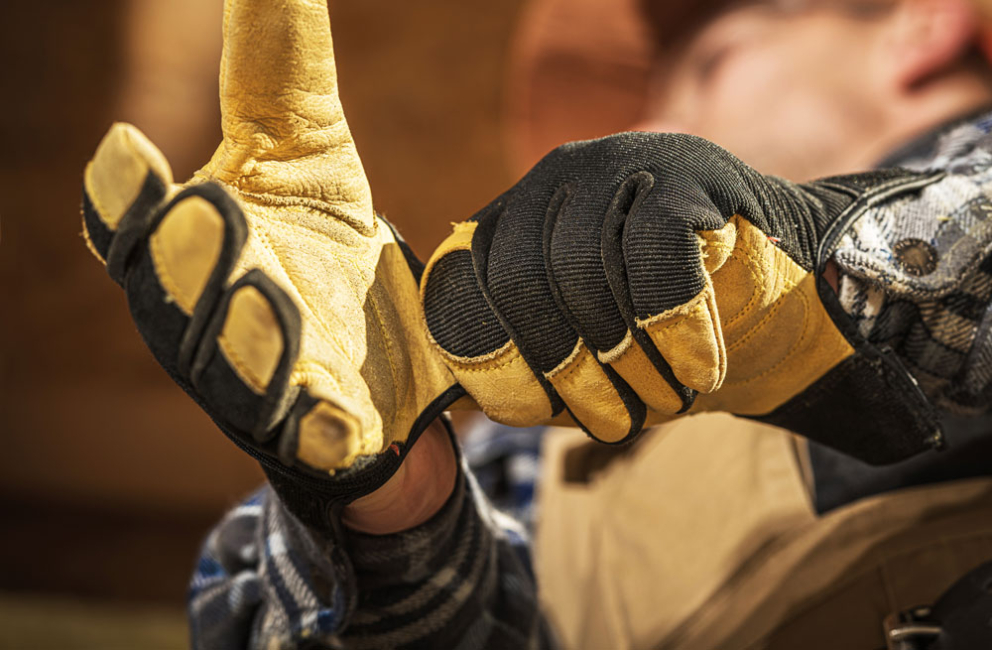
For many public works employees, gloves become such a routine part of the job that it's easy to grab whatever pair is closest and get to work. Unfortunately, that's exactly how hand injuries happen. Wearing gloves is important, but wearing the right gloves for the specific task is what truly protects your hands. The wrong gloves can provide a false sense of security, leaving workers exposed to cuts, punctures, chemical burns, crush injuries, or entanglement hazards.
Our hands are among our most valuable tools. They are also one of the body parts most frequently injured in public works. Whether you're repairing roads, clearing storm damage, maintaining equipment, handling chemicals, or pruning trees, nearly every task places your hands at risk. Choosing gloves based on convenience rather than hazard is a mistake that can have lifelong consequences.
One of the biggest misconceptions, especially amongst newer, inexperienced workers, is that all work gloves provide the same level of protection. They do not. A thin pair of inexpensive leather work gloves might protect against dirt, splinters, and minor abrasions, but they offer very little protection against razor-sharp metal edges, utility knife blades, chainsaw teeth, or the hardened steel knives inside a wood chipper. Wearing ordinary leather gloves while changing wood chipper blades, for example, provides almost no meaningful cut resistance. Those blades are designed to slice through hardwood. Human skin and thin leather stand little chance against them.
Instead, tasks involving extremely sharp edges should be performed with gloves specifically designed for cut resistance. Modern cut-resistant gloves use materials such as Kevlar®, Dyneema®, HPPE (High Performance Polyethylene), steel fibers, or blended synthetic fabrics that dramatically increase protection against lacerations. While no glove is completely cut-proof, the proper glove can mean the difference between a close call and a trip to the emergency room.
Chemical hazards present an entirely different challenge. Leather or fabric gloves often absorb oils, fuels, pesticides, solvents, and other chemicals, holding them against the skin. In these situations, chemical-resistant gloves made from nitrile, neoprene, butyl rubber, or other specialized materials are the appropriate choice. The correct glove depends on the chemical being handled, which is why workers should always consult the Safety Data Sheet (SDS) before selecting protective equipment.
Cold weather also requires careful glove selection. Thin gloves may preserve dexterity, but they do little to prevent frostbite or numb fingers during winter operations. Insulated gloves help maintain warmth while allowing workers to safely handle tools and equipment. In wet winter conditions, waterproof insulated gloves prevent moisture from soaking through and accelerating heat loss.
Some jobs require protection from impact rather than cuts. Highway maintenance crews handling heavy materials, operating jackhammers, or moving concrete products may benefit from gloves with reinforced knuckle protection and impact-resistant padding. These gloves help reduce injuries from dropped objects, pinched fingers, and accidental blows.
Just as important as choosing the right glove is knowing when not to wear gloves. Around rotating machinery such as drill presses, lathes, and some other equipment, loose-fitting gloves can become entangled and pull a worker's hand into the machine. Equipment manufacturers and operating procedures should always be followed regarding glove use around rotating equipment. In some situations, bare hands are actually the safer option.
Fit also matters. Gloves that are too large reduce grip strength and dexterity while increasing the risk of snagging on equipment. Gloves that are too tight can restrict movement, cause hand fatigue, and tear more easily. Workers should have access to properly sized gloves that allow them to safely perform their assigned tasks.
Unfortunately, many organizations unintentionally encourage poor glove selection by purchasing a single style of glove for every employee. While this approach may simplify purchasing, it ignores the wide variety of hazards encountered in public works. A worker mowing roadside vegetation, another replacing street signs, and a mechanic servicing hydraulic equipment all face very different risks. A one-size-fits-all glove policy rarely provides adequate protection.
Supervisors should encourage employees to stop and ask a simple question before beginning any task:
"What hazards will my hands face during this job?"
The answer should guide glove selection. Is there a cut hazard? A puncture hazard? Chemical exposure? Heat? Cold? Electrical risk? Impact? Once the hazards are identified, the appropriate glove becomes much easier to choose.
Training is equally important. Workers should understand the limitations of their gloves. Cut-resistant gloves are not cut-proof. Leather gloves are not chemical resistant. Disposable nitrile gloves are not designed for handling sharp metal. Every glove has strengths and weaknesses, and understanding those limitations helps employees make better decisions in the field.
At the end of the day, gloves should be viewed like any other piece of personal protective equipment. You wouldn't wear flip-flops to pour concrete or safety glasses to protect your hearing. The same principle applies to gloves. Matching the glove to the hazard is one of the simplest and most effective ways to prevent painful, life-changing hand injuries.
Hands heal slowly, and some injuries never fully recover. Taking a few extra moments to choose the proper gloves is a small investment that can protect the tools you rely on every single day.