
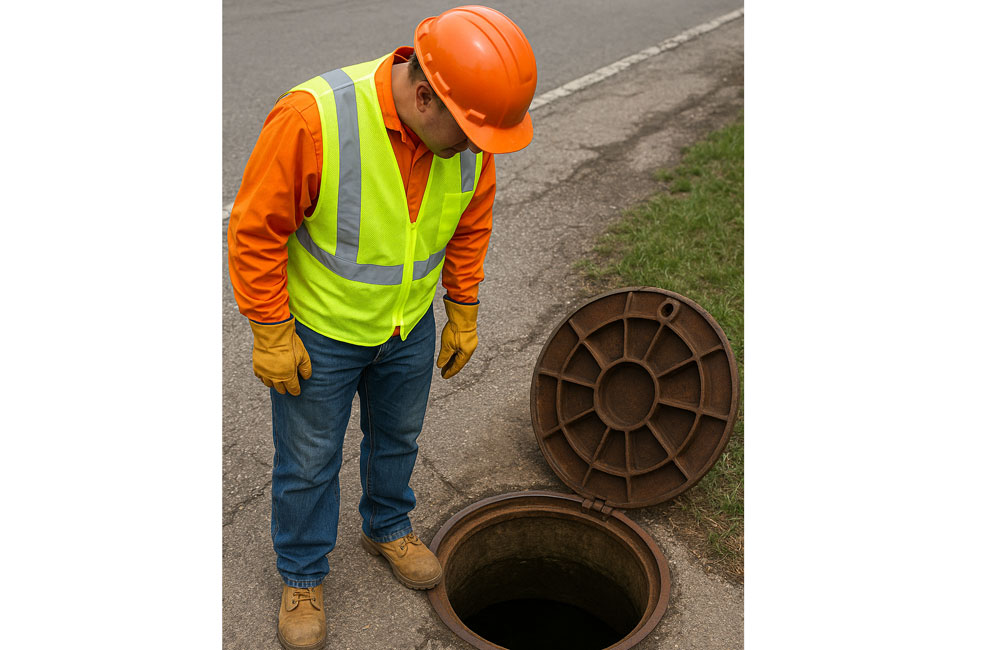
Gas monitors are essential safety tools for crews who work in confined spaces, manholes, pump stations, lift stations, culverts, and other locations where hazardous atmospheres can form. A gas monitor provides real-time information about oxygen levels, explosive gases, and toxic contaminants. When used correctly, it gives workers the warning they need to evacuate before conditions become deadly.
To make a gas monitor reliable, crews must understand how to calibrate it, how to use it in the field, and how to interpret its readings. This guide explains the fundamentals every public works employee should know before entering a potentially hazardous atmosphere.
Many confined spaces are oxygen deficient, contaminated with hydrogen sulfide or carbon monoxide, or contain flammable vapors that can ignite. These hazards are invisible and often odorless. A monitor serves as the eyes and ears of the crew, offering the only dependable way to confirm air quality before entry.
Gas monitors typically track four primary hazards:
Oxygen
Hydrogen sulfide (H2S)
Carbon monoxide (CO)
Lower Explosive Limit (LEL) for combustible gases
If any of these reach unsafe levels, workers must stop entry and follow established procedures.
Calibration ensures the sensors respond correctly when exposed to known concentrations of gases. Without proper calibration, a monitor may fail to alarm when a dangerous condition is present.
Before each use, perform a bump test. This exposes the sensors to a small amount of test gas to confirm they respond and trigger alarms. The test should:
Verify that alarms activate
Confirm the display reacts to the gas
Indicate whether sensors are functioning
If a bump test fails, the monitor is unreliable until recalibrated.
A full calibration is more detailed and uses certified gas concentrations. Manufacturers specify how often calibration must occur, but many agencies perform it monthly or after any significant impact, sensor exposure error, or failed bump test.
Calibration should only be done with the correct test gas, proper regulators, and in accordance with manufacturer instructions. A poorly calibrated monitor is as dangerous as no monitor at all.
A gas monitor only protects you if it is used correctly. Important field practices include:
Always sample air at the top, middle, and bottom of a confined space. Different gases settle at different levels. For example, hydrogen sulfide is heavier than air, while methane rises.
Atmospheric conditions can change rapidly. A blower might fail, a chemical reaction might occur, or groundwater might enter the space and release gases. The monitor should remain on and attached to the entrant throughout the entire operation.
The best placement is within the breathing zone, usually clipped near the chest area. This ensures that what the monitor detects is what the worker is breathing.
Avoid covering sensors with clothing or tools. Anything that restricts airflow can delay alarms.
Knowing how to read and interpret the monitor is just as important as turning it on.
Normal air contains about 20.9 percent oxygen. Levels below 19.5 percent are unsafe. Low oxygen can result from rusting metal, decomposing organic matter, or displacement by another gas.
This gas smells like rotten eggs at low concentrations but quickly deadens the sense of smell. Even a small amount can cause serious health effects. Monitors should alarm at the OSHA and manufacturer-recommended thresholds.
A colorless and odorless gas produced by engines and combustion. CO poisoning can happen quickly in enclosed spaces where equipment is operating.
The LEL reading indicates the percentage of flammable gases present. Once the atmosphere reaches 10 percent of the LEL, work must stop immediately due to risk of ignition.
If any alarm activates, workers must exit immediately and investigate the cause. Do not attempt to silence or override alarms.
Keeping a gas monitor in good condition ensures it stays reliable.
Charge the battery after each use
Store in a clean, dry place
Keep sensors free of debris
Log bump tests and calibrations
Replace sensors according to the manufacturer’s schedule
A well-maintained monitor lasts longer and protects workers more effectively.
Gas monitors are life-saving instruments that support safe entry into confined and hazardous spaces. When workers understand how to calibrate them, how to use them properly, and how to interpret their readings, they gain powerful protection against invisible threats. Public works crews should treat gas monitors as essential safety equipment and ensure every worker is trained before entering any environment where atmospheric hazards may exist.