
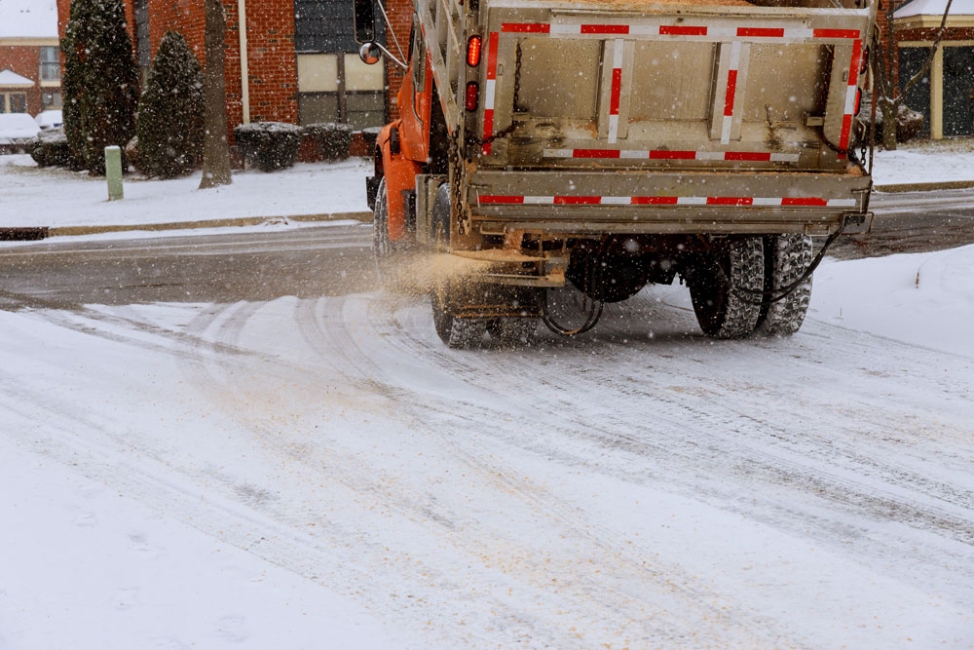
Salt and sand spreaders are essential tools for maintaining safe winter roadways, but they also introduce a range of hazards that crews must manage carefully. Operators work around heavy equipment, moving conveyors, spinning disks, and corrosive materials, often in darkness or bad weather. A well maintained spreader and a trained operator can make winter operations safer and more efficient, while poor practices can result in injuries, equipment damage, or hazardous road conditions.
This article provides practical safety guidance for loading, operating, maintaining, and troubleshooting salt and sand spreaders as part of municipal winter maintenance operations.
Spreaders influence both worker safety and public safety. Improper operation or maintenance can lead to:
Material shortages during a storm
Equipment failure on an active route
Corrosive burns or eye injuries
Struck by hazards from loaders
Slips and falls while climbing on spreader beds
Excessive or insufficient material application
Damage to vehicles traveling behind the plow truck
Taking a few minutes to operate spreaders safely can prevent costly incidents during already demanding winter shifts.
Before loading or activating the spreader, the operator should perform a full inspection.
Confirm the spreader is mounted securely to the truck
Ensure power and control cables are connected and free of wear
Inspect hydraulic hoses for cracks or leaks
Check the conveyor chain or auger for obstructions
Verify spinner disk is firmly attached and rotates freely
Confirm lights near the hopper and spreader function properly
Remove ice or snow buildup around moving components
Document any issues and correct them before loading material.
Loading material is one of the highest risk phases because it involves two pieces of equipment working in close proximity.
Maintain eye contact with the truck operator
Approach slowly and never raise the bucket over the cab
Avoid striking the hopper or tailgate
Stay aware of blind spots in snow piles or low light
Stay inside the cab during loading whenever possible
Keep the truck parked on level ground
Communicate clearly using radio or hand signals
Never climb into or onto the hopper while the loader is nearby
Salt is corrosive, and sand may be dusty or frozen into chunks.
Workers should:
Wear safety glasses and gloves
Avoid breathing heavy dust from dry materials
Break up frozen chunks before loading
Keep a safe distance from overhead buckets
Once loaded, proper spreader operation is essential for safe road conditions.
Calibrate the spreader for correct application rates
Adjust output based on temperature, road conditions, and route type
Avoid over applying material, which wastes resources and can create traction issues
Ensure operators understand every control, knob, or switch
Monitor spread pattern through mirrors or hopper cameras
Keep spinner areas clear of accumulated snow or slush
Be cautious when backing, because spinner assemblies stick out farther than expected
Slow down on curves, intersections, or steep grades
Material application must be predictable and consistent to ensure driver safety.
Conveyors and spinners can catch gloves, jackets, or straps.
Avoid:
Reaching into any moving equipment
Wearing loose clothing around the spreader
Attempting to clear jams while the system is powered
Always shut power off and lock out controls before clearing obstructions.
Salt can irritate skin and eyes.
Prevention:
Wear waterproof gloves
Keep eye protection on hand
Wash hands before eating or drinking
Rinse spreader surfaces regularly to reduce buildup
Climbing onto spreaders is dangerous in icy weather.
Improve safety by:
Using designated steps and handholds
Avoiding walking on the top edge of hoppers
Clearing snow and ice from footholds
Spreaders operate in active traffic during storms.
Use:
Amber warning lights
Proper follow distances
Appropriate winter PPE
Spotters when backing in tight yards or garages
Blockages are common, especially when loading damp sand or salt that has refrozen.
Before clearing a jam:
Turn off the spreader
Shut down the truck’s PTO or electrical system
Remove the key and secure it
Use a tool, not your hands, to dislodge material
Never place any body part inside the hopper or conveyor area
If in doubt, have a mechanic assess the problem.
Good maintenance prevents breakdowns during storms.
Empty the hopper if possible
Run conveyor briefly to clear leftover material
Rinse salt residue from spreader components
Inspect hoses, controls, and spinner assembly for wear
Park indoors when available to prevent freezing
Report any mechanical issues immediately
Maintenance teams rely on accurate reports from operators to keep equipment storm ready.
All employees who operate or work around spreaders should receive winter specific training.
Training topics include:
Proper loading procedures
Control panel operation
Material calibration
Recognizing mechanical issues
Emergency shutdown procedures
Clearing jams safely
PPE requirements
Traffic safety when spreading
A trained operator is far less likely to experience a spreader related incident.
Salt and sand spreaders are essential but potentially hazardous tools in winter operations. By following proper loading procedures, using controls correctly, maintaining equipment, and understanding the hazards, public works crews can operate spreaders efficiently and safely throughout the winter season. Consistent training and strong communication reinforce these safety practices and reduce the risk of workplace injuries.