
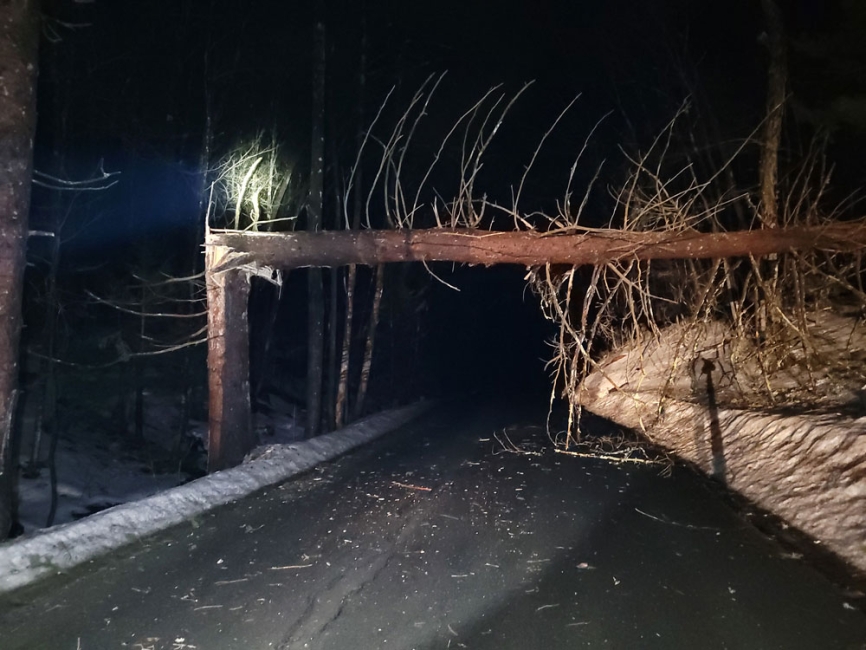
In public works operations, few hazards are as unpredictable and deadly as a “widowmaker.” This term refers to a broken tree or large limb that remains suspended in another tree after a storm, high winds, snow load, or improper cutting. These hung-up trees can fall without warning, creating a serious struck-by hazard for highway crews, parks staff, and storm response teams.
Understanding how widowmakers form and how to bring them down safely is essential for protecting workers during debris removal and right-of-way clearing.
A widowmaker is typically:
A broken limb caught in the canopy
A partially cut tree lodged in another tree
A storm-damaged trunk suspended above ground
A leaning tree supported by branches or adjacent trees
They are common after severe weather events and during tree removal operations when a tree does not fall as planned.
The greatest danger is unpredictability. Vibration from equipment, shifting wind, or cutting a supporting branch can cause sudden release.
Public works crews often encounter widowmakers during:
Storm cleanup along roadways
Park and trail maintenance
Drainage ditch clearing
Right-of-way vegetation management
Key hazards include:
Sudden falling limbs or trunks
Shifting or rolling logs
Spring-loaded branches under tension
Equipment contact that destabilizes the load
Limited escape routes due to terrain or debris
Many serious injuries and fatalities occur when workers stand beneath or directly adjacent to a hung-up tree.
Before taking action:
Establish a safety perimeter
Identify all overhead hazards
Determine what is supporting the tree
Evaluate lean angle and tension points
Consider weather conditions and wind
Never walk directly under a hung-up tree to inspect it.
Clear non-essential personnel from the area
Designate one person as the signal lead
Maintain visual contact between operators and ground workers
Identify two clear escape routes at 45-degree angles from the anticipated fall path
Mechanical advantage is safer than manual intervention. Options may include:
Excavators with grapples
Bucket truck
Skid steers with forestry attachments
Loaders
Winch trucks
Rope and pulley systems rated for the load
Whenever feasible, bring the widowmaker down from a distance rather than cutting directly beneath it.
Cutting the trunk of a hung-up tree from underneath is extremely dangerous. If cutting is required:
Only trained chainsaw operators should perform the work
Evaluate compression and tension forces
Make small, controlled relief cuts
Maintain a clear escape path
Never stand in the fall line
If the tree is severely lodged or unstable, consider bringing in a professional arborist or specialized contractor.
Branches and trunks under tension can release like a spring when cut. Signs of stored energy include:
Bent or bowed limbs
Pinched saw bars
Twisted trunks
Audible cracking or fiber separation
Always anticipate movement when making any cut.
Storm response can create pressure to clear roads quickly. However, widowmakers demand patience. Taking time to properly assess and control the hazard prevents serious injury.
If the situation cannot be controlled safely with available equipment and training, stop and reassess.
Conduct a job safety analysis before beginning work.
Ensure chainsaws are properly maintained and operators are trained.
Monitor wind conditions that could shift the suspended load.
Avoid working alone in remote areas.
Maintain radio communication when visibility is limited.
Workers involved in removing hung-up trees should wear:
Hard hat with chin strap
Safety glasses or face shield
Hearing protection
Chainsaw chaps or cut-resistant pants
Cut-resistant gloves
High-visibility vest
Steel toe boots with aggressive tread
PPE does not eliminate risk, but it reduces injury severity if an incident occurs.
Widowmakers are among the most dangerous hazards encountered during public works tree operations. They combine height, weight, tension, and unpredictability in one scenario.
The safest approach is to control the hazard from a distance, use appropriate equipment, maintain clear escape routes, and never work directly beneath suspended material. Taking extra time to evaluate and plan can prevent serious injury or loss of life.
Public works crews face challenging conditions during storm cleanup and vegetation management. Recognizing and respecting the danger of widowmakers is a critical part of keeping everyone safe.