
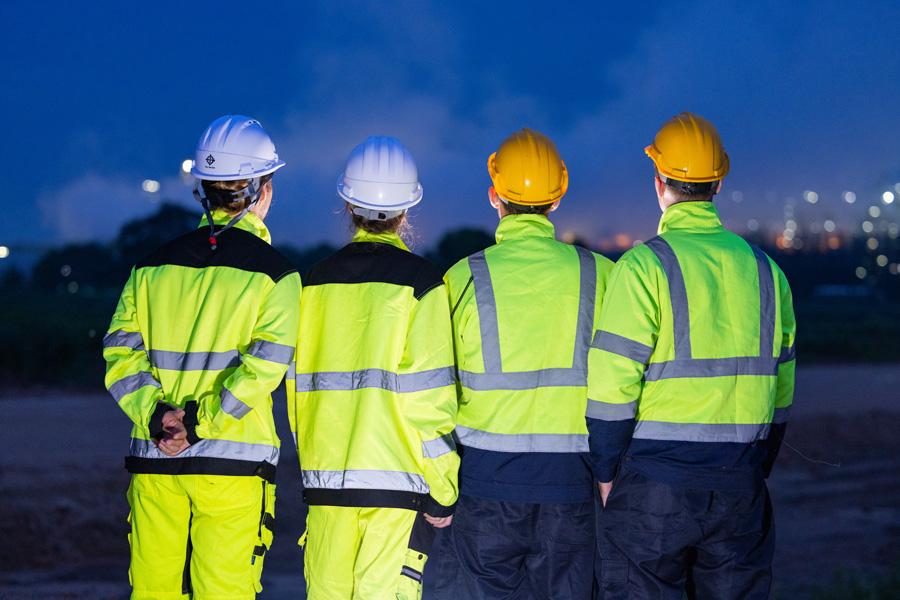
High-visibility clothing is one of the most critical layers of protection for public works crews operating in or near traffic, heavy equipment, and low-light conditions. The American National Standards Institute (ANSI), through ANSI/ISEA 107, sets the requirements for high-visibility safety apparel to ensure workers are seen and recognized in hazardous environments. Understanding these standards helps supervisors and crew members select the right gear for the job and stay compliant with safety expectations.
ANSI/ISEA 107 is the standard that defines the design, performance, and materials required for high-visibility safety apparel (HVSA). It is developed in collaboration with the International Safety Equipment Association (ISEA) and is widely recognized across construction, public works, transportation, and utility industries.
The standard focuses on improving worker visibility through:
Fluorescent background materials
Reflective striping
Garment design and coverage
ANSI high-visibility garments are divided into three performance classes based on the level of visibility they provide.
Class 1 garments provide the lowest level of visibility and are intended for low-risk environments.
Typical use cases:
Parking lot attendants
Warehouse workers
Sidewalk maintenance crews away from traffic
Key features:
Least amount of reflective and background material
Suitable for areas with slow-moving equipment or traffic under 25 mph
Class 2 is the most commonly used category in public works.
Typical use cases:
Roadway maintenance crews
Utility workers
Survey crews near traffic
Key features:
Increased reflective striping
Greater background material coverage
Required when working near traffic speeds above 25 mph or in inclement weather
Class 3 garments provide the highest level of visibility and are required for high-risk environments.
Typical use cases:
Highway construction crews
Nighttime road work
Emergency responders
Key features:
Full-body visibility including sleeves
Maximum reflective coverage
Designed for high-speed traffic and low-visibility conditions
ANSI standards apply to several types of garments commonly used in public works:
Lightweight and breathable
Often Class 2
Ideal for warm weather or short-duration tasks
Available in Class 2 and Class 3
Provide weather protection and visibility
Common in winter operations
Typically Class E (supplemental garments)
Must be worn with Class 2 or 3 tops to achieve full Class 3 compliance
Full-body protection
Often meet Class 3 requirements
Used in high-risk or high-exposure environments
Every ANSI-compliant garment includes a label that provides important information:
Performance Class (1, 2, or 3)
Type (O, R, or P)
Flame resistance (if applicable)
Manufacturer details and care instructions
In addition to classes, garments are categorized by type:
Type O (Off-Road): For controlled environments with no traffic exposure
Type R (Roadway): For workers exposed to traffic on public roads
Type P (Public Safety): For emergency and law enforcement personnel
For most public works crews, Type R garments are the standard requirement.
High-visibility apparel should be worn whenever workers are exposed to:
Vehicular traffic
Construction equipment
Low-light or nighttime conditions
Adverse weather such as rain, fog, or snow
Many agencies require ANSI Class 2 or 3 garments at all times when working within the right-of-way.
Even when crews are wearing high-visibility clothing, improper use can reduce its effectiveness.
Wearing the wrong class for the work zone
Allowing garments to become faded, torn, or dirty
Covering reflective striping with tools or outerwear
Not replacing worn-out gear
Failing to wear required garments consistently
To maximize safety and compliance:
Match the garment class to the hazard level and traffic speed
Inspect high-visibility gear regularly for damage or fading
Replace garments that no longer meet visibility standards
Ensure proper fit so reflective areas are not obstructed
Train crews on when and how to wear each type of garment
ANSI-compliant high-visibility clothing is not just a recommendation. It is often required by OSHA and state agencies for workers exposed to traffic hazards. More importantly, it plays a direct role in preventing struck-by incidents, one of the leading causes of injuries and fatalities in public works.
By understanding ANSI standards and applying them consistently, agencies can significantly improve worker visibility, reduce risk, and create safer job sites.