
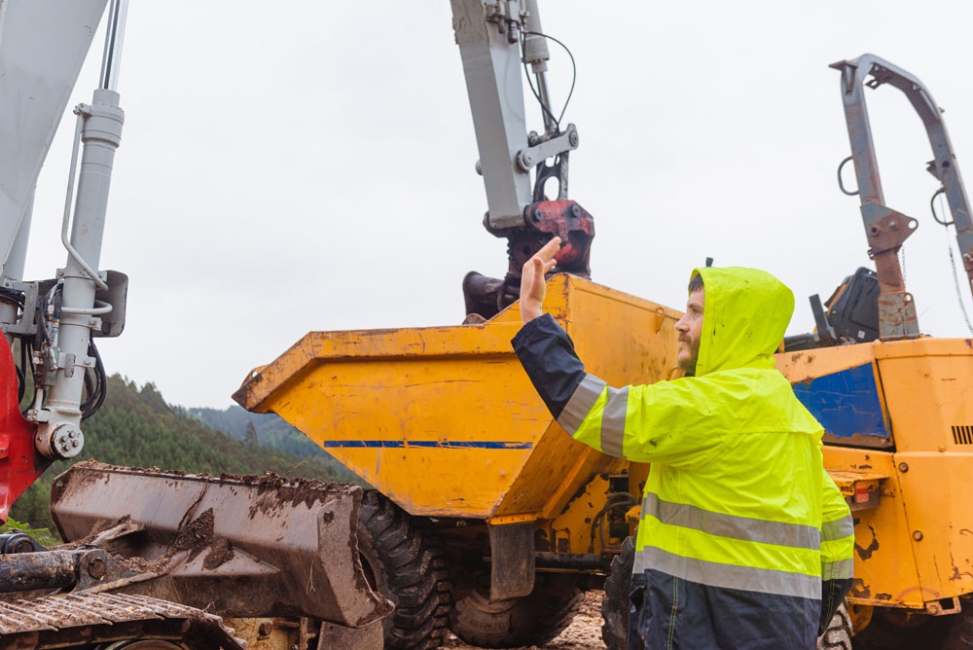
Spotters play a critical role in preventing struck by incidents and equipment collisions on public works job sites. Excavators and dump trucks both have large blind spots and move heavy loads in tight spaces. Without a clear and reliable communication system, operators cannot safely navigate around ground crews, traffic, or nearby structures. This article covers proven spotter techniques that help keep crews safe and projects moving without unnecessary risk.
Even the best operators cannot see everything from the cab. Excavators have significant blind areas behind and beside the machine. Dump trucks lose visibility when backing or when the box is raised. Mirrors and cameras help, but they cannot replace a trained spotter who can see the entire picture and warn of hazards immediately.
A good spotter provides three essential benefits:
Clear direction so the operator knows where to move
Hazard awareness for people, utilities, or obstacles
Control of the work zone by managing foot traffic and vehicle movement
When spotters and operators work as a team, the risk of struck by incidents drops dramatically.
Communication starts long before equipment begins to move. A brief tailgate talk between the operator and spotter sets the foundation for safe operations.
Key points to agree on:
Hand signal meanings and which ones will be used
Radio channel selection and whether radios will be primary or backup communication
Where the spotter will stand during each phase of the work
What the operator should do if communication is lost (always stop the machine)
The safe distance the spotter will maintain at all times
This simple pre planning step prevents most misunderstandings before they start.
Hand signals remain the most reliable communication method, even when radios are used. Spotters should use:
Large, exaggerated movements so operators can see them clearly
Only the agreed upon signals to avoid confusion
Positioning that allows constant eye contact
Two hands for emergency stop to ensure the operator notices the command
The operator should stop immediately if the spotter is not visible or if any signal is unclear.
Radios help in noisy environments or when distance is unavoidable.
Best practices include:
Use short, clear commands such as “Back two feet” or “Swing left”
Avoid long explanations while equipment is moving
Wait for confirmation before the operator responds
Stay calm even when directing quick adjustments
Limit radio chatter to essential movement instructions
If the radio cuts out, both operator and spotter should default to a full stop until communication is restored.
A spotter’s positioning is one of the most important safety decisions on any job site.
General guidelines:
Stay outside the equipment’s swing zone
Never stand directly behind a dump truck
Remain on the operator’s line of sight side
Avoid areas with loose footing or low visibility
Keep a clear escape route in case the equipment moves unexpectedly
Spotters should never assume they are visible. If the operator cannot see them, they are not in a safe location.
Excavators can rotate a full circle, which makes spotter awareness especially important.
Stay clear of both the bucket and tail swing zones
Use simple directional cues for swing movements
Warn operators of anyone entering the exclusion zone
Confirm that the operator sees you before stepping closer
Tail swing strikes are common and preventable when spotters communicate clearly and maintain a safe distance.
Dump trucks create unique challenges due to their size and limited rear visibility.
Stand to the driver’s side whenever possible
Guide backing movements slowly with clear signals
Watch for overhead hazards during dumping
Ensure the dump area is clear of people and equipment
Stay well away from the rear wheels since they pivot during tight turns
Backing accidents are one of the most frequent dump truck incidents. A disciplined spotter reduces this risk significantly.
If the operator loses sight of the spotter or cannot hear a radio transmission, the rule is simple: stop immediately. Movement should not resume until communication is reestablished. This avoids panic corrections and unpredictable movements that can seriously injure ground personnel.
Spotting is not an informal task. It is a designated safety role. Departments should train their crews on standardized hand signals, job site positioning, and consistent radio etiquette. Operators should feel comfortable relying on their spotters, and spotters should be confident in directing equipment.
Strong communication saves time, prevents injuries, and keeps both operators and ground crews safe. By refining spotter communication and reinforcing expectations on every job, public works teams can significantly reduce risk during excavator and dump truck operations.