
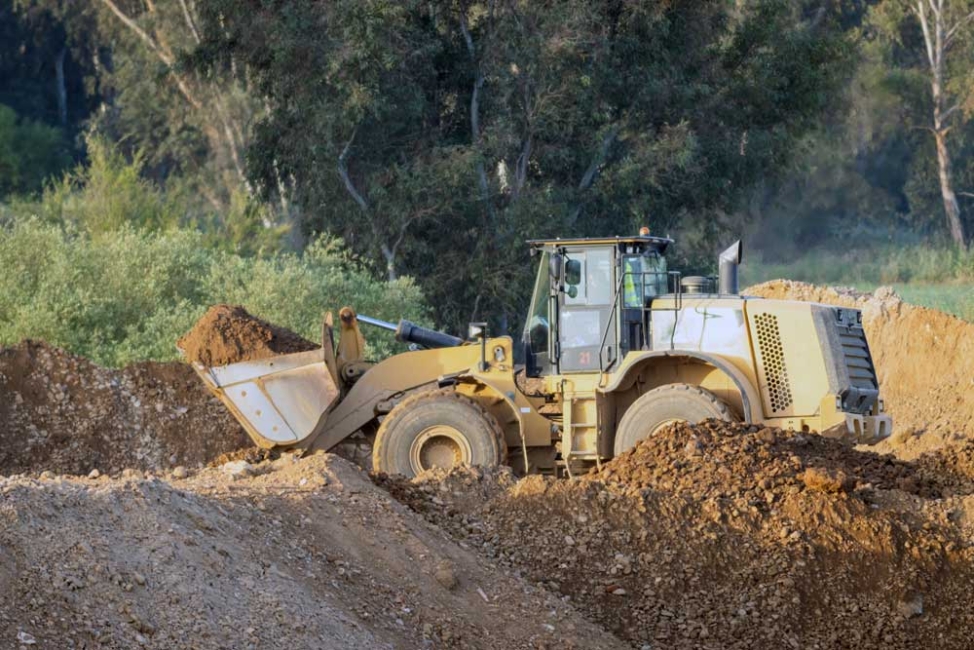
Rollovers remain one of the deadliest risks in public works and construction. Whether operating loaders, backhoes, tractors, graders, mowers, or dump trucks, crews frequently work on slopes, shoulders, work pads, and utility trenches. Soft ground, hidden voids, steep grades, and unstable edges can cause a machine to tip with little warning.
Preventing rollovers starts with understanding how equipment behaves, identifying ground conditions that compromise stability, and building safe operating practices into every task.
This article gives crews practical guidance to prevent rollovers on uneven or soft terrain.
Most rollover incidents result from one or more of the following:
Operating on ground that cannot support the machine’s weight
Improper approach angles or steep slopes
Working close to edges like trenches, embankments, or soft shoulders
Raising a load too high or carrying uneven weight
Turning too sharply or too fast on compromised terrain
Failing to recognize hidden hazards like sinkholes, culvert voids, or saturated soils
Rollovers often happen suddenly. The key to prevention is recognizing early warning signs and adjusting operations before a machine reaches its tipping point.
Ground assessment should happen before equipment moves onto a work area, especially after rain, thawing, or when operating near drainage features.
Visible settling or depressions
Soft, muddy, or saturated soil
Uncompacted fill
Areas where underground utilities or culverts may cause voids
Recently excavated ground
Steep side slopes or slope transitions
Soft shoulders along roads
Probing the soil with a shovel, rod, or bucket test can reveal softness that is not visible from the operator seat.
Stability depends on keeping the machine’s center of gravity low and balanced.
Best practices:
Keep loaders, buckets, and attachments as low as possible during travel
Avoid swinging booms or raised loads across the slope
Carry only what is necessary
Reduce speed when carrying any elevated load
Never raise the load while driving on uneven terrain
A small height increase can dramatically shift balance on soft or sloped ground.
Speed amplifies instability. The steeper the slope or softer the soil, the more controlled the movement needs to be.
Travel slowly, especially when descending slopes where weight can shift quickly
Turn gradually and wide, never sharply
Approach slopes straight up or straight down
Avoid side slope travel whenever possible
Use low gear to maintain consistent traction and control
Edges near trenches, embankments, culverts, and ditches often look solid but may not support a machine.
Recommendations:
Maintain setback distances based on soil type and machine weight
Do not operate directly on the edge of a trench or excavation
Establish barricades or spotter guidance when working near drop offs
Know frost heave, thawed soil, or recent rainfall can create hidden voids
Avoid backing too close to soft or untested shoulders
Cracking soil, sloughing edges, or small collapses are immediate signs to stop and reposition.
Spotters are essential when the operator cannot fully see grade transitions, edges, or obstructions.
Spotters should:
Stay visible to the operator
Use clear hand signals or radios
Direct the operator around hazards, not through them
Watch for ground movement or shifting conditions
A trained spotter can catch signs of instability an operator may miss.
Different equipment types handle slopes differently. Consult the manufacturer guidance for:
Maximum slope ratings
Load limitations
Proper ballast or counterweight requirements
Tire pressures and track conditions
Stability when attachments are installed
Never assume a machine is safe on a slope simply because it handled it once.
If a rollover occurs, survival depends on two things:
ROPS (Rollover Protective Structure) and a properly worn seat belt.
ROPS keeps the operator zone intact
The seat belt keeps the operator inside that protected zone
An unbelted operator risks being thrown from the cab and crushed
Using the seat belt must be non-negotiable.
Operators should stop immediately if they notice:
Excessive bouncing or leaning
Unusual tire or track movement
Soil pumping or water surfacing under the machine
Cracking ground near the machine’s weight
Sudden loss of traction
A load shifting unexpectedly
These signs warn that ground conditions may not support continued operation.
A simple tailgate talk before work can prevent serious incidents.
Topics to review:
Ground conditions and likely hazards
Slope limits for the equipment being used
Safe paths of travel and areas to avoid
When a spotter is required
Weather impacts from rain, frost, or melt
Parking and staging areas
Crewwide understanding reduces risk significantly.
Preventing rollovers on uneven or soft ground requires more than careful driving. It relies on a combination of planning, ground assessment, equipment knowledge, spotter communication, and disciplined operating practices.
Every public works crew should treat rollovers as preventable events. With proper attention, operators can move safely through challenging terrain and keep themselves and their coworkers out of harm’s way.