
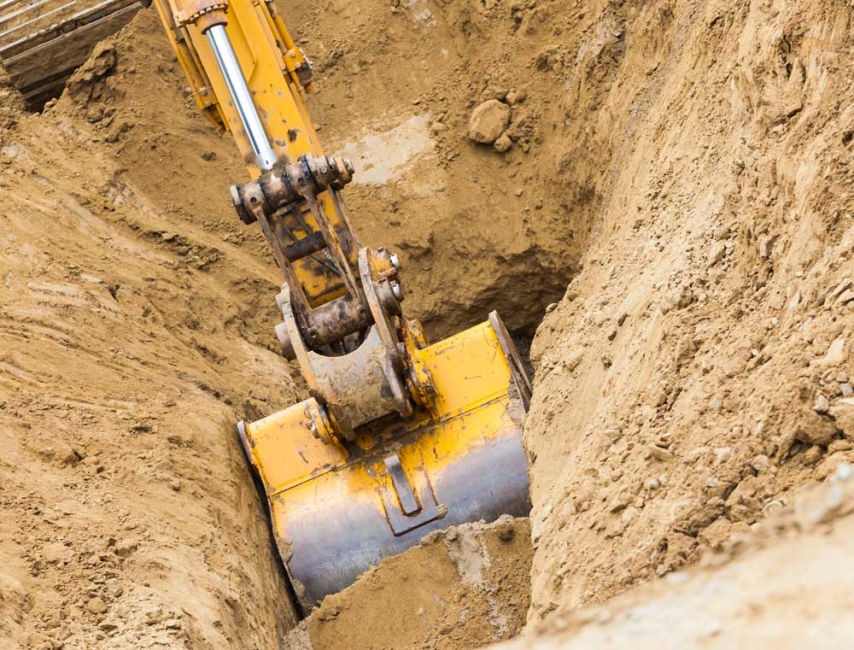
Every excavation, no matter how small, begins with the same critical question: What type of soil are we digging into? Soil classification is the foundation of safe trenching. It determines whether trench walls will stand firm or collapse without warning, and it dictates what protective measures (sloping, benching, shoring, or trench boxes) are legally required.
OSHA recognizes three basic soil types: A, B, and C - each representing a different level of stability. Misjudging this classification is one of the most common causes of trench failures, injuries, and fatalities.
This deep dive explains each soil type, how to identify it, and the hazards that field crews must consider before entering an excavation.
Soil’s ability to stay in place when cut vertically determines the risk of a cave-in. A cubic yard of soil weighs roughly 2,500-3,000 pounds, making even a minor collapse deadly.
Correct soil classification:
Determines slope angles for safe trenches
Determines whether benching is allowed
Helps crews choose shoring or trench boxes
Guides decisions on access, spoil placement, and water management
Failing to classify soil, or guessing wrong, puts crews at immediate risk.
A competent person must conduct soil testing before workers enter a trench. They examine:
Cohesiveness (how well soil sticks together)
Unconfined compressive strength
Presence of water
Previous disturbance
Layering or seams
Vibration sources (traffic, machinery)
Common testing methods include:
Thumb penetration test
Pocket penetrometer
Torvane shear test
Visual/manual inspection (water content, grain size, layering)
If soil types vary across the trench, crews must assume the least stable type.
Hard, dense clay
Unconfined compressive strength ≥ 1.5 tons per square foot (tsf)
Often cohesive and sticky when moist
Holds shape when cut
Few cracks or fissures
Sloping: Maximum steepness 3/4:1 (53° angle)
Benching: Allowed
Trench boxes / shoring: Always acceptable alternatives
Even though Type A is stable, it is rare in municipal work because:
Most soil near roads/rights-of-way has been previously disturbed
Vibration from traffic quickly downgrades soil to Type B
Water or freeze–thaw cycles weaken cohesiveness
Hazards include:
Hidden fissures due to drying
Brittle failure that occurs suddenly
False sense of security - crews assume clay “won’t collapse”
Mistaking B or C for A can lead to trenches sloped too steeply, increasing collapse risk.
Previously disturbed soils
Silt, sandy loam, or angular gravel
Clay that has fissures
Unconfined compressive strength: 0.5-1.5 tsf
Soil that is somewhat cohesive but not strong enough to qualify as Type A
Most municipal trenches; along roads, shoulders, and utility corridors - fall into Type B simply because the soil has been dug up, backfilled, compacted, or vibrated over many years.
Sloping: 1:1 (45° angle)
Benching: Allowed
Trench boxes / shoring: Always acceptable
Moderate cohesion gives crews a sense of “stability,” but collapse risk remains high.
Layers from previous excavations can shear and slide.
Soil dries unevenly and cracks over time.
Vibration from traffic or equipment quickly destabilizes walls.
Type B soils fail quietly at first, often giving little visual warning.
Loose sand, gravel, or flowing soils
Saturated or submerged soils
Soil with unconfined compressive strength < 0.5 tsf
Spoils, unconsolidated fill, or material dug up and dumped elsewhere
Soil that sloughs off easily and cannot stand vertically
Sloping: 1½:1 (34° angle)
Benching: NOT allowed
Trench boxes / shoring: Strongly recommended and often essential
Type C soil is responsible for the majority of trench fatalities.
Hazards include:
Instant collapse - no cohesion
Flowing or sliding soil that behaves like liquid
Water seepage that undermines trench walls
“Lip failures” where the upper edges suddenly fall
Distant vibration (traffic, equipment, train movements) triggering collapse
If a trench wall looks crumbly, wet, sandy, or unstable - it must be treated as Type C.
OSHA requires soil to be classified as Type C when:
The trench contains standing water
Soil is frozen, then thawed
Soil is submerged or saturated
Excavation is in sand, silt, or gravel
The trench is in a previously excavated right-of-way
There are layers at different angles, causing shear planes
These conditions override any other soil characteristics.
Many municipal trenches contain multiple layers:
Clay over sand
Silt over gravel
Old fill over natural soil
Road base (stone) over compacted subgrade
In these cases, OSHA requires crews to classify the trench as the least stable material present.
If there’s a six-inch layer of sand beneath three feet of clay, the trench is Type C.
Even stable soils can quickly downgrade due to:
The single fastest way to destabilize soil.
Creates fissures and voids that undermine stability.
From excavators, traffic, compactors, or trains - causing gradual soil movement.
Adds additional downward pressure, accelerating collapse.
Loads the soil and increases sidewall shear.
| Soil Type | Stability Level | Example Materials | Max Allowed Slope | Benching Allowed? | Collapse Risk |
|---|---|---|---|---|---|
| A | Most stable | Clay, hard cohesive soil | 3/4:1 (53°) | Yes | Moderate |
| B | Moderate | Silt, loam, angular gravel, formerly Type A with fissures | 1:1 (45°) | Yes | High |
| C | Least stable | Sand, gravel, saturated soil, submerged soil | 1½:1 (34°) | No | Extreme |
The soil type determines how a trench must be protected. There is no “guessing” in excavation safety. Municipal and public works crews often work in unpredictable, disturbed, and water-affected soils, which means Type B and Type C conditions are the norm, not the exception.
If there is any doubt, always assume Type C and use a trench box or shoring. Soil won’t give you a second chance.